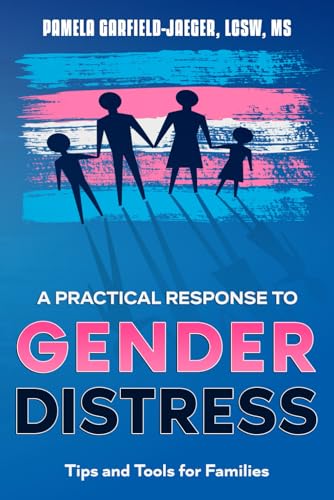
For clinicians
A Practical Response to Gender Distress
A direct, non-ideological framework for understanding and responding to gender distress in your practice.
Buy on AmazonFor clinicians
Twenty-five years of experience: community mental health, private practice, schools, hospitals. I have watched our field forget some of the most important things it knows. This page is for the clinician who has not forgotten, and for the one who is trying to remember.

If this sounds like you
You were taught to validate first, assess second, and you can feel something slipping.
You watched a supervisor mistake conformity for competence.
You have written notes you would not want read aloud in court.
You suspect the loudest consensus in your field is the least examined.
You still believe therapy is a craft, not a script.
You are being taught to reinforce victimhood status instead of personal responsibility.
Six principles
None of these are novel. That is the point.
Principle 01
A thorough assessment is the foundation of ethical treatment. Understand the person before you intervene.
Principle 02
Considering alternatives is not gatekeeping.
Principle 03
When parents are pushed out of the picture, you lose the most important information you will ever have.
Principle 04
Foundational theories may not answer every question we face today, but they provide essential context for understanding a child's behavior, needs, and struggles.
Principle 05
Two clinicians can hold different views and both be ethical. Pretending otherwise is what is corrosive.
Principle 06
Surround yourself with people who can tolerate different opinions and can allow you to ask important questions.
The Truthful Therapist is Courageous
Name the clinical question. Ask what literature they are using. Hold the line on assessment.
Ask the family in. Hear the history.
Make an effort to find clinicians you can talk to about your concerns. Read more on Substack.
The basics are basic for a reason, ask more questions than your training ever told you to.

“I hear it all the time from other therapists: 'I wasn't going to say anything, but I saw what you were doing and realized I wasn't crazy.' That's what I want to be: the one who broke the seal so more of us could speak up.”
What I offer clinicians
A single hour to think out loud about one case (assessment, documentation, family work, referrals).
Book a session →Group trainings for practices, schools, and professional associations on assessment, family-inclusive care, and ethics.
Request a talk →Essays for clinicians who want a calmer, more rigorous conversation about the work.
Read the newsletter →Books
Two books worth having on your shelf: a direct framework for understanding gender distress, and a children's story to share with the families you work with.
For clinicians
A direct, non-ideological framework for understanding and responding to gender distress in your practice.
Buy on Amazon
A children's book
An honest and fun book for kids and the grown-ups reading them, about appreciating who you are.
Buy on AmazonContinuing education
Practical training for clinicians who want to work with gender distress more carefully. Hosted by Lisa Mustard.
CEU course
A foundational course for clinicians who want a clearer, more careful framework for understanding gender distress in the therapy room.
Best for therapists looking to move beyond affirmation-as-default and assess with nuance.
View course detailsCEU course
Training focused on helping parents and adult children navigate gender distress while preserving family relationships and clinical integrity.
Best for clinicians working with families where an adult child is exploring or asserting a gender identity.
View course detailsFor the field
Short, practical essays on craft, ethics, and the small choices that add up to a career you can stand behind.